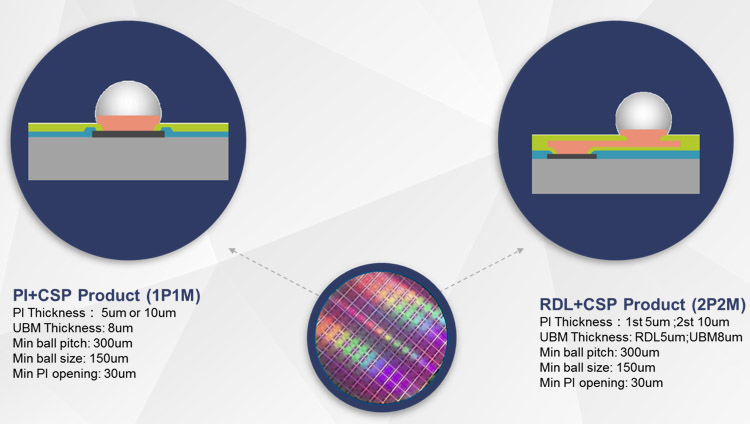
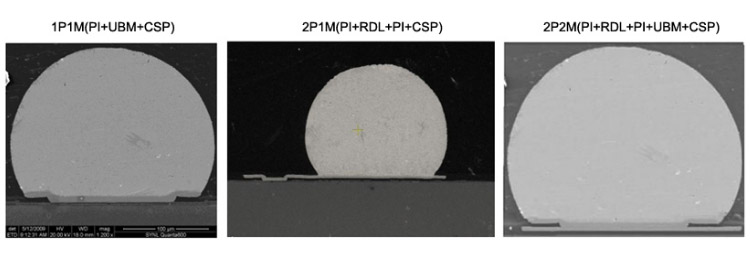
Wafer Level Chip Scale Packaging (WLCSP) is a wafer-level chip packaging method that differs from traditional chip packaging (dicing first, then packaging and testing, which increases the volume by at least 20% over the original chip). This advanced technology performs thin film deposition, photolithography, and electrochemical deposition processes on the entire wafer for packaging and testing, then dices it into finished chips with dimensions identical to the bare die. It does not require wire bonding or underfill processes, and the packaged chip size is nearly the same as the bare die, achieving the limit of miniaturization (packaging efficiency approaching 100%). It aligns with market trends for light, small, short, and thin consumer electronics, and offers advantages of high density, low inductance, low cost, and excellent thermal performance. The cost advantage becomes more pronounced as wafer size increases and chip size decreases.
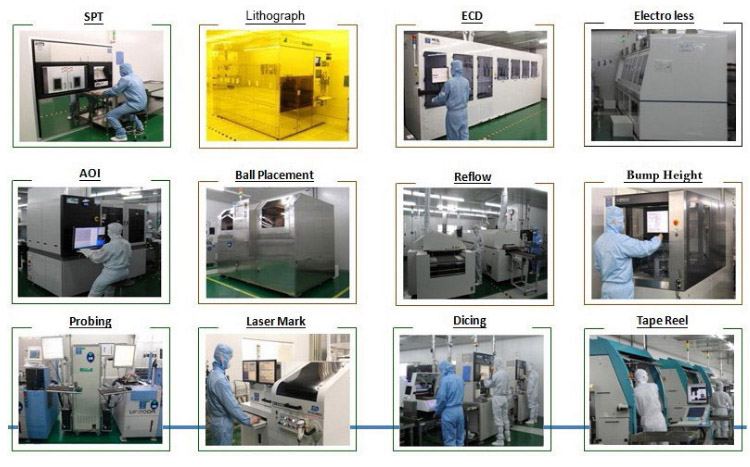
Electroplating Tin Ball Technology utilizes coating, photolithography, electroplating, and etching processes to create tin bumps on chip pads. The bumps are then reflowed at high temperature for encapsulation. This technology can significantly reduce IC volume and offers advantages of high density, low inductance, low cost, and excellent thermal performance. Wafer Level Chip Scale Packaging (WLCSP) is generally only suitable for placing large tin balls on pads with relatively large spacing. However, the electroplating tin ball technology has been successfully applied in flip-chip assembly for manufacturing small tin balls with fine pitch and ultra-thin package thickness, demonstrating its superiority.
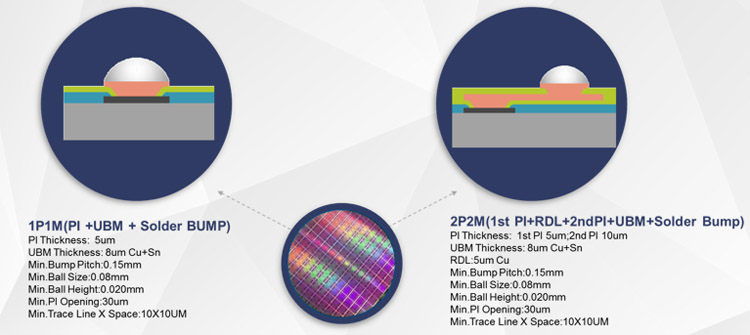
Ball Drop technology precisely places solder balls onto chip pads through automated equipment, then uses reflow soldering to melt the balls and form reliable electrical and mechanical connections with the pads, achieving integration between the chip and external circuits. Ball Drop technology is suitable for high-density routing design, featuring high precision, high automation, and suitability for mass production. The solder ball connections provide high strength, making them ideal for harsh environments and high-performance applications.